
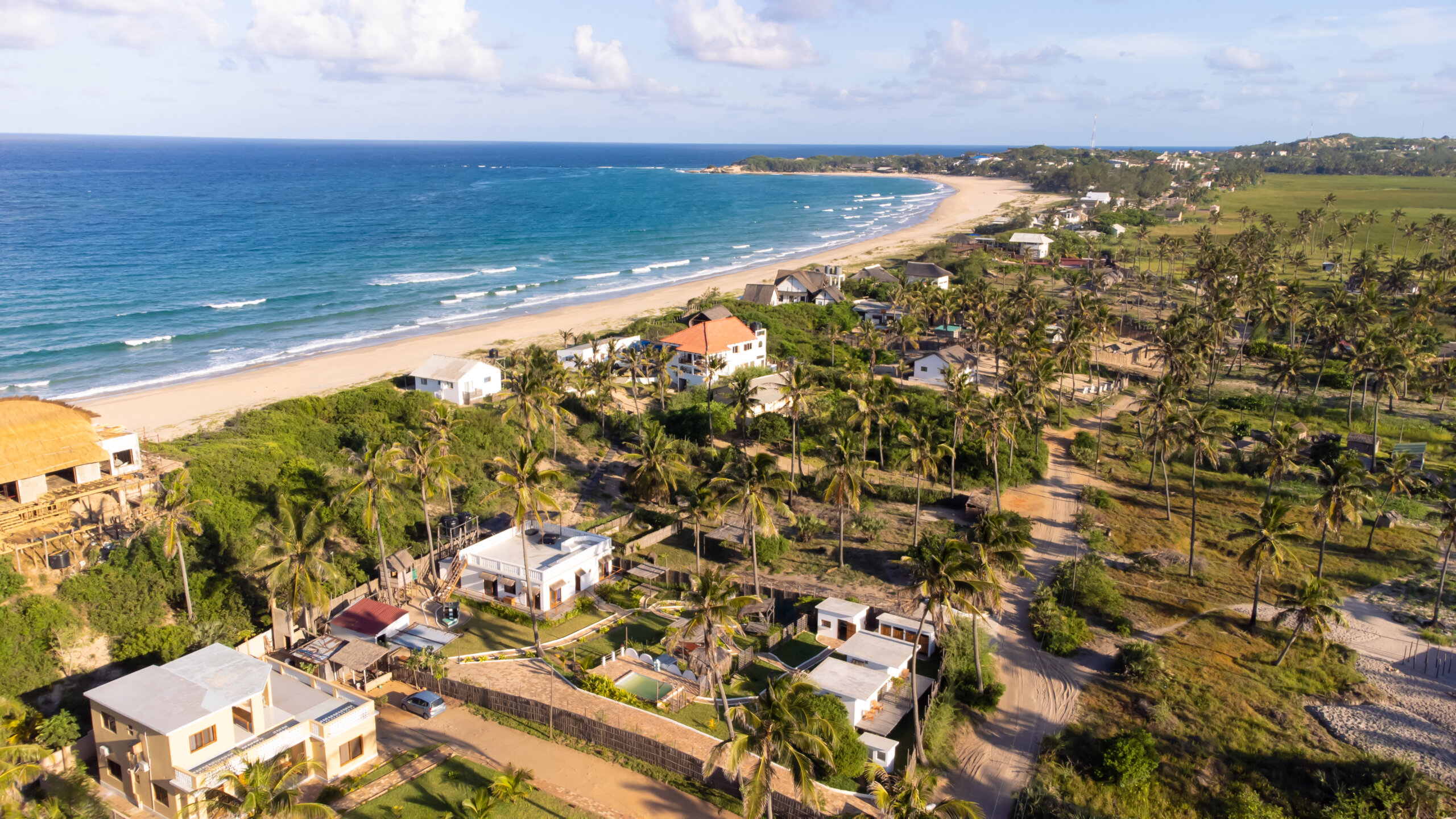
Buying property in Mozambique comes with many myths and mis-conceptions. In fact, if we had a dollar for every time a potential buyer told us they’d heard you “can’t really own property in Mozambique” — we’d own a lot more property in Mozambique.
The myths and misconceptions surrounding property ownership in this country are widespread, persistent, and frankly, costing people life-changing opportunities. Some of these myths come from outdated information. Some come from well-meaning but uninformed friends. And some — frustratingly — come from advisors who don’t fully understand Mozambican property law and steer buyers in completely the wrong direction as a result.
We’re going to set the record straight. Once and for all.
Myth #1: “Mozambique is a Communist Country — The State Owns Everything”
This is the most common and most damaging myth of all, and it couldn’t be further from the truth.
Yes, Mozambique had a Marxist-Leninist government after independence in 1975. Yes, the state nationalised land and property during that period. But that was fifty years ago. Mozambique transitioned to a multi-party democracy and a fully privatised market economy in the early 1990s — and the property market has been privately owned and traded ever since.
Today, Mozambique’s property market is completely privatised. Title deeds — known as a Título de Propriedade — are openly and legally bought and sold between private individuals, both local and foreign. There are thousands of foreign nationals who own property in Mozambique right now, with full legal title, who bought and sold without any involvement of the state beyond the standard registration process.
The idea that Mozambique is a communist country where private ownership doesn’t exist is simply not accurate. It belongs to the same category of myth as “you can’t get a decent meal in Mozambique” or “there are no paved roads.” Outdated, inaccurate, and worth ignoring entirely.
The reality: Mozambique has a fully privatised property market. Title deeds are legally traded. Foreign nationals own property here every day.
Myth #2: “All Property in Mozambique is on a 99-Year Lease — You Never Really Own It”
This one contains a grain of truth buried under a mountain of misunderstanding. Let’s unpick it properly.
It is true that in Mozambique, all land constitutionally belongs to the State. Nobody — local or foreign — can own bare, undeveloped land in the freehold sense. Instead, the State grants what is known as a DUAT (Direito de Uso e Aproveitamento da Terra) — a legally protected right to use and develop a specific parcel of land.
But here is the critical distinction that most people miss completely:
The DUAT applies to land. Not to property.
Any building, structure or improvement constructed on that land — a house, a villa, a lodge, a warehouse — is privately owned by whoever built or purchased it, and is issued its own title deed. That title deed is yours. It does not expire. It is not a lease. It is freehold ownership of the structure, fully transferable, fully inheritable, and fully yours.
When you buy a built property in Mozambique — a beach house, a family home, a lodge — you are buying the building and its title deed outright. The DUAT attached to the underlying land transfers automatically with the property as part of the sale. You are not buying a lease. You are not renting from the government. You own the property.
The “99-year lease” confusion comes from conflating the DUAT system for bare land with the ownership of built property. They are two entirely different things, governed by different rules.
The reality: When you buy a built property in Mozambique, you receive a freehold title deed for the structure. The DUAT transfers with the property automatically. You own it outright.
Myth #3: “After 49 Years the DUAT Expires and You Lose Everything”
This myth causes enormous unnecessary anxiety — and it is based on a fundamental misreading of how the DUAT system actually works.
Yes, DUATs are issued for defined periods — typically 49 years for the initial grant, with the possibility of renewal. But the word “renewal” is doing a lot of heavy lifting here that people consistently overlook.
A DUAT is renewable. Provided the holder has complied with the conditions of the DUAT — which in practice means using the land for its stated purpose and keeping up with any applicable obligations — renewal is not just possible, it is the standard outcome. The DUAT does not simply expire and disappear, taking your property with it. It is renewed, much like a business licence or a long-term lease in any other country.
Furthermore, for built-up urban properties — which is what most foreign buyers are purchasing — the practical reality is that the DUAT framework becomes almost academic. The title deed for the building is what matters for day-to-day ownership, transfer, and inheritance. The DUAT renewal process runs in the background, managed as part of standard property administration.
Nobody who has bought a well-documented property in Mozambique and maintained it properly has lost that property because a DUAT expired. That is not how it works in practice.
The reality: DUATs are renewable provided you comply with their conditions. For built properties, the title deed is the primary ownership document. Losing your property because a DUAT expires is not a real-world risk for compliant property owners.
Myth #4: “You Have to Set Up a Mozambican Company Just to Buy a Holiday Home”
This one is not just a myth — it’s actively bad advice that has cost foreign buyers significant unnecessary expense, and we see it more often than we should.
The confusion arises because there are specific rules around foreigners acquiring bare, undeveloped land in their personal name. Under Mozambican law, a foreign individual who wants to acquire a DUAT for undeveloped land must have been resident in Mozambique for at least five years. Companies incorporated in Mozambique with foreign shareholders do not face the same restriction.
So yes — if you are a foreigner wanting to acquire a DUAT for a bare plot of land in your personal name and you haven’t been resident for five years, a Mozambican company structure makes sense.
But here is what far too many advisors fail to explain: if you are buying an existing built property — a house, a villa, a holiday home — this restriction does not apply.
When you purchase a built property, you are buying the structure and its title deed. The DUAT transfers automatically with the property. There is no five-year residency requirement for buying an existing built property in your personal name. Foreigners do this every day in Mozambique, entirely legally, without setting up a company.
Setting up a Mozambican company (Sociedade por Quotas, or LDA) involves registration costs, annual compliance costs, accounting requirements and administrative obligations. For someone who simply wants to own a holiday home in Tofo or Barra, these costs are entirely unnecessary and add up significantly over time.
Company ownership absolutely has its place — for investors acquiring development land, for those structuring commercial investments, or for buyers who specifically want the benefits that company ownership provides. But it is not a requirement for buying a residential property, and anyone who tells you otherwise without thoroughly explaining the distinction is not giving you complete advice.
The reality: Foreigners can buy existing built residential properties in their personal name without setting up a company. Company ownership is appropriate in specific circumstances — but it is not a blanket requirement for all foreign buyers.
Myth #5: “The Government Can Expropriate My Property Whenever It Wants — Just Like in South Africa”
Given the heated debate around expropriation without compensation in South Africa, it is completely understandable that buyers from South Africa — and internationally — are nervous about this issue. But Mozambique and South Africa are in very different positions on this question, and the distinction matters enormously.
Mozambique’s Private Investment Law (Law 8/2023) sets out explicitly the circumstances under which expropriation can occur and — critically — the protections that apply when it does.
Under Article 8 of that law, the expropriation, nationalisation or requisition of an investor’s assets is prohibited unless three conditions are simultaneously met: the measure must be based on genuine public interest, it must be applied without discrimination, and it must be accompanied by fair compensation reflecting the actual market value of the assets at the time the measure is declared.
That compensation must be paid promptly. In the case of foreign direct investment, it must be freely transferable abroad and convertible into foreign currency. And the investor has the right to challenge any expropriation through dispute resolution — including international arbitration.
In plain English: expropriation without compensation is not legal in Mozambique. The law explicitly prohibits it and provides enforceable remedies if it is attempted. The bar for any expropriation is set very high, the compensation standard is market value, and the legal protections are real.
In practice, arbitrary expropriation of private foreign investment in Mozambique is extremely rare. The country’s economic development depends on foreign investment, and the legal framework reflects that reality.
This is fundamentally different to the current policy debate in South Africa, where expropriation without compensation is being actively legislated. Mozambique’s constitutional and investment law framework provides a meaningfully stronger set of protections for foreign property owners.
The reality: Expropriation without compensation is explicitly prohibited under Mozambican law. Any expropriation must be in the genuine public interest, non-discriminatory, and compensated at full market value. Arbitrary seizure of foreign-owned property is not a feature of the Mozambican system.
The Bottom Line
Mozambique’s property market is legitimate, legally sound, and full of genuine opportunity for foreign buyers. The myths that surround it are largely a product of outdated information, misunderstood legal concepts, and — occasionally — advisors who don’t know the full picture.
The reality is straightforward:
- Private property ownership is real and legally protected in Mozambique
- Buying a built property gives you a freehold title deed — not a lease
- DUATs are renewable and the expiry myth is not a real-world risk for compliant owners
- You do not need a company to buy a residential holiday home
- Your investment is protected by law against expropriation without compensation
If you’ve been holding back from exploring Mozambique property because of any of these concerns, we hope this has put your mind at rest.
The next step is simple — browse our current listings and see what’s available, or read our complete guide to buying property in Mozambique for a full walkthrough of the purchase process.
And if you want to go even deeper — the MozInvest Guide covers all of this and more in comprehensive detail, including the specific legal frameworks, ownership structures, tax obligations and investor protections that apply to foreign buyers in Mozambique. Get the MozInvest Guide here.
Or simply get in touch with us directly — we’re on the ground in Mozambique, we know this market inside out, and we’re always happy to have an honest conversation.
Move2Moz is a fully accredited Mozambique property agency based in Inhambane Province. We have been helping foreign buyers purchase, transfer and manage property in Mozambique since 2016. All information in this article is provided for general guidance purposes. We recommend seeking independent legal advice for your specific situation.
