
By Move2Moz | Category: Investing in Mozambique
Let’s play a game.
You have $100,000. It’s yours, it’s real, and you want to put it into property. What do you get?
The answer depends entirely on where you’re looking — and the difference between your options is so stark it will either make you laugh, cry, or immediately start Googling flights to Mozambique.
We’ve done the research. Here’s the honest comparison.
$100,000 in Cape Town, South Africa
Cape Town is one of the most beautiful cities in the world. It’s also one of the most expensive property markets on the African continent relative to local incomes.
$100,000 — roughly R1.8 million at current exchange rates — gets you approximately the following in Cape Town:
A studio apartment in a less sought-after suburb. No ocean view. Probably a sectional title in a complex with levies. In areas like Bellville or Mitchells Plain. If you stretch to the Atlantic Seaboard or Southern Suburbs, you’re not even in the conversation at this price point.
And you’ll pay for it in other ways too. Rates, levies, load shedding infrastructure costs, security upgrades, and an insurance premium that reflects the reality of South African urban property ownership.
For $100,000 in Cape Town, you own a box. A perfectly respectable box, but a box nonetheless.
$100,000 in London, United Kingdom
London’s average property price currently sits north of £500,000. $100,000 doesn’t buy you a parking space in most London postcodes — literally.
What it might get you, if you look hard enough in the outer boroughs or commuter belt: a deposit on a mortgage for a one-bedroom flat in Zone 4 or 5. You’ll spend the next 25 years paying the rest of it off, in one of the world’s most expensive cities to live in, in a country currently experiencing its most severe cost of living crisis in a generation.
$100,000 in London is a down payment on debt.
$100,000 in Sydney, Australia
Sydney’s median house price recently surpassed AUD $1.4 million. $100,000 is roughly AUD $155,000 — enough for a deposit on an apartment in Western Sydney, far from the harbour, the beaches, or anything resembling the Sydney lifestyle people imagine when they think about moving to Australia.
You’ll work hard for that property. And you’ll keep working hard to hold onto it.
$100,000 in Lisbon, Portugal
Portugal became one of Europe’s most fashionable relocation destinations over the past decade — and prices have followed accordingly. Lisbon’s property market has surged dramatically. $100,000 today gets you very little in the city itself. Perhaps a studio in a peripheral neighbourhood, or a share in a rural property far from the coast.
Portugal is beautiful. It’s also no longer cheap.
$100,000 in Mozambique
Now we’re talking.
For $100,000 in southern Mozambique — specifically in the Inhambane Province coastal region — here is what is genuinely, actually, right-now available to a foreign buyer:
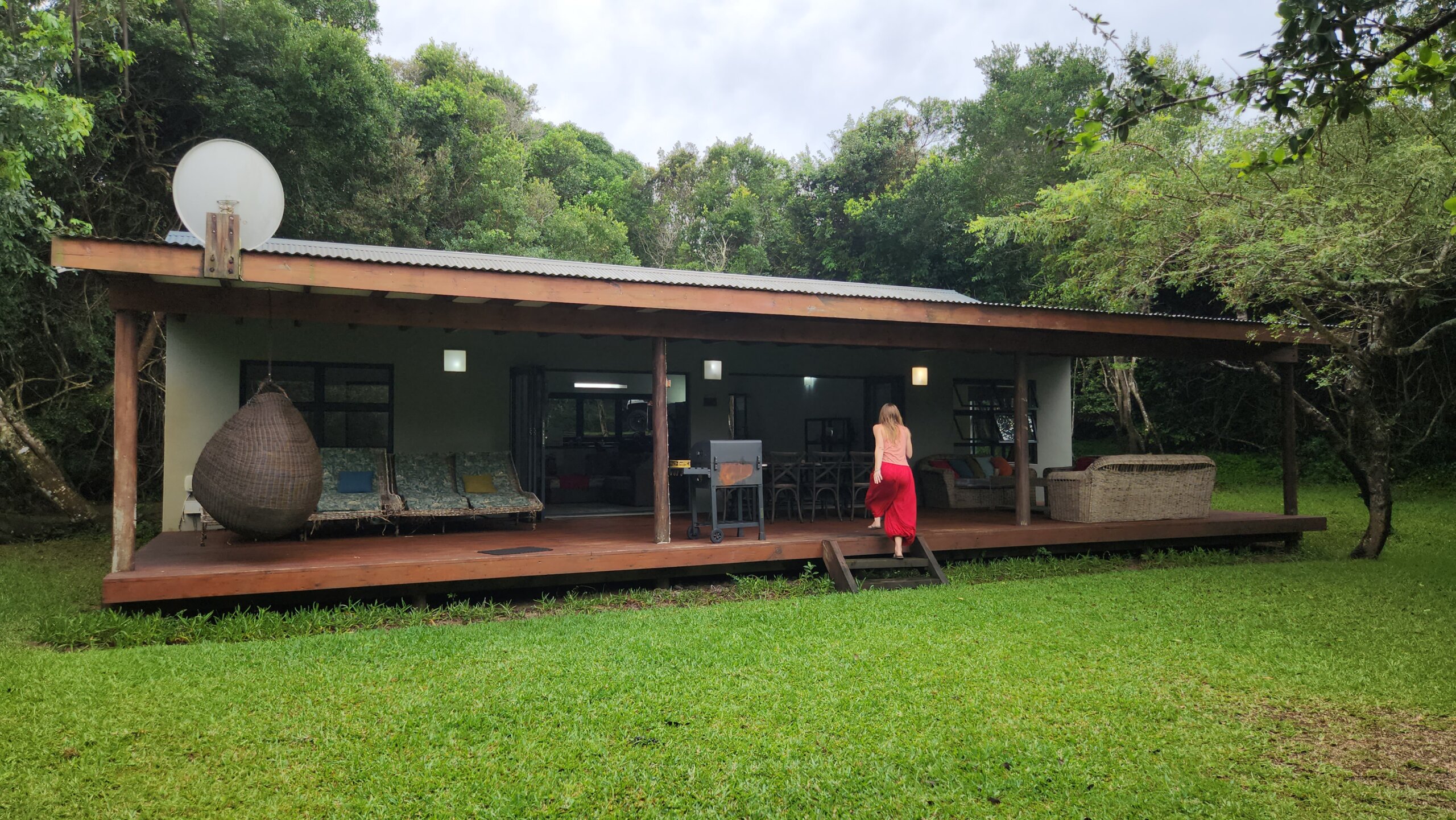
A standalone house, on its own plot, with a garden. In a location where the Indian Ocean is either visible from your veranda or a short walk away. In a community with established infrastructure, a functioning expat network, good local restaurants, and some of the most extraordinary marine life on the planet accessible from your doorstep.
Not a deposit. Not a studio in a suburb you’ve never heard of.
A whole property. Yours.
We currently have listings in this price range including beachfront and near-beach properties in Inhambane Province. These are not compromise properties. These are genuinely beautiful homes in genuinely extraordinary locations that simply reflect the reality of what Mozambique’s property market currently offers.
But Wait — Can Foreigners Actually Own Property in Mozambique?
Yes. Fully, legally, and more straightforwardly than most people expect.
When you buy a built property in Mozambique, you receive a title deed — a Título de Propriedade — for the structure. Foreign nationals can own buildings and improvements in Mozambique regardless of how long they’ve been resident. The land system (DUAT) is different to Western freehold ownership, but it is legally sound, well established, and the DUAT transfers automatically with the property when you buy.
Thousands of foreign nationals own property in Mozambique right now. South Africans, Portuguese, British, Dutch, Americans — all legally titled, all protected under Mozambican investment law, which explicitly prohibits expropriation without fair market compensation.
We’ve written a complete guide to the buying process if you want the full picture: How to Buy Property in Mozambique as a Foreigner.
The Hidden Value That Doesn’t Show Up in the Price Tag
The purchase price is only part of the story. Here’s what $100,000 in Mozambique also buys you that no comparable amount in Cape Town, London or Sydney can:
A cost of living that makes sense. Fresh seafood that costs a fraction of what it does in any Western city. Local produce, domestic help, dining out — all genuinely affordable. A family can live very well in coastal Mozambique on a budget that would feel modest back home.
Space. Real space. Land. A garden. Room to breathe. Not a sectional title in a complex where you can hear your neighbours through the walls.
A natural environment of extraordinary quality. Whale sharks. Manta rays. Humpback whales visible from the shore between July and November. Pristine coral reefs. Warm Indian Ocean water year round. The kind of natural environment that people in Cape Town, London and Sydney pay thousands to visit on holiday — and that you’d wake up to every morning.
A community that already works. Southern Mozambique has a well-established expat community — people who have already made the leap, built lives, started businesses and found their feet. You would not be pioneering alone.
Starlink connectivity. The days of worrying about internet in Mozambique are over for expats. Starlink is widely used throughout the coastal regions, meaning remote working, video calls and staying connected are all fully viable.
The Objections We Hear — Answered Honestly
“But isn’t it risky?” All property investment carries risk. The relevant question is whether the risk-reward ratio makes sense. At $100,000 for a freehold property in a location of extraordinary natural beauty with growing international interest and very limited competing supply — we think it does. Strongly.
“What about infrastructure?” Most established properties in coastal Mozambique run on borehole water and solar power — off-grid capability is standard, not exceptional. Healthcare requires planning and international medical insurance is essential. Mozambique is a developing country and that requires a realistic mindset. But it is a developing country with a warm climate, extraordinary coastline, fertile land and a legal framework that protects foreign investment.
“What about the political situation?” Southern Mozambique — where Move2Moz operates — is stable and safe. The security concerns that occasionally make international news relate to the Cabo Delgado region in the far north, which is geographically and culturally very different from Inhambane Province. Our clients live here, raise families here, and run businesses here.
“Will my investment hold its value?” Mozambique’s property market is early. International awareness is growing. The people buying now are the ones who will look back in a decade and say they got in at exactly the right time. We cannot guarantee appreciation — nobody can — but the fundamentals are compelling.
What To Do Next
If the comparison above has got you thinking, the next step is simple: come and look at what’s actually available.
Browse our current listings — including properties in and around the $100,000 price range in Inhambane, Tofo, Barra, Guinjata and beyond.
Read our complete buying guide for everything you need to know about the legal process, ownership structures and what to expect as a foreign buyer.
Or simply get in touch — we’re on the ground in Mozambique, we know every property on our books personally, and we’re always happy to have an honest conversation about whether this makes sense for your specific situation.
Ready to go deeper? The MozInvest Guide is the most comprehensive resource available for foreign property buyers in Mozambique — covering ownership law, DUAT structures, company formation, tax obligations and investor protections in full detail. 👉 Get the MozInvest Guide
Move2Moz is a fully accredited Mozambique property agency based in Inhambane Province. We have been helping foreign buyers purchase, transfer and manage property in Mozambique since 2016. Property prices and exchange rates referenced in this article are approximate and subject to change. This article is for general information purposes only and does not constitute financial or investment advice.
